
Discover pain-free teeth cleaning!
Teeth cleaning is important for preventing tooth decay and gum disease, removing surface stains, and maintaining good oral hygiene. It also permits early detection of problems such as cavities and periodontal disease, contributing to improved overall health. A healthy mouth helps prevent systemic complications.
The World Health Organization has identified oral diseases such as tooth decay and periodontitis as key health problems that can be prevented by maintaining a healthy lifestyle and by receiving regular, effective oral hygiene measures to remove microbial plaque (biofilm).
Dental technology has advanced considerably in recent years. One of the most exciting developments is EMS’s Guided Biofilm Therapy (GBT), a dental cleaning protocol designed to improve oral health in a personalized and comfortable way. Below, we will explore what GBT is and how it can benefit those who seek a gentler, more effective alternative for their oral hygiene.EMS (Electro Medical Systems) is a Swiss company that is a leader in medical technology, specializing in innovative solutions in the areas of dentistry, urology, and pain management.
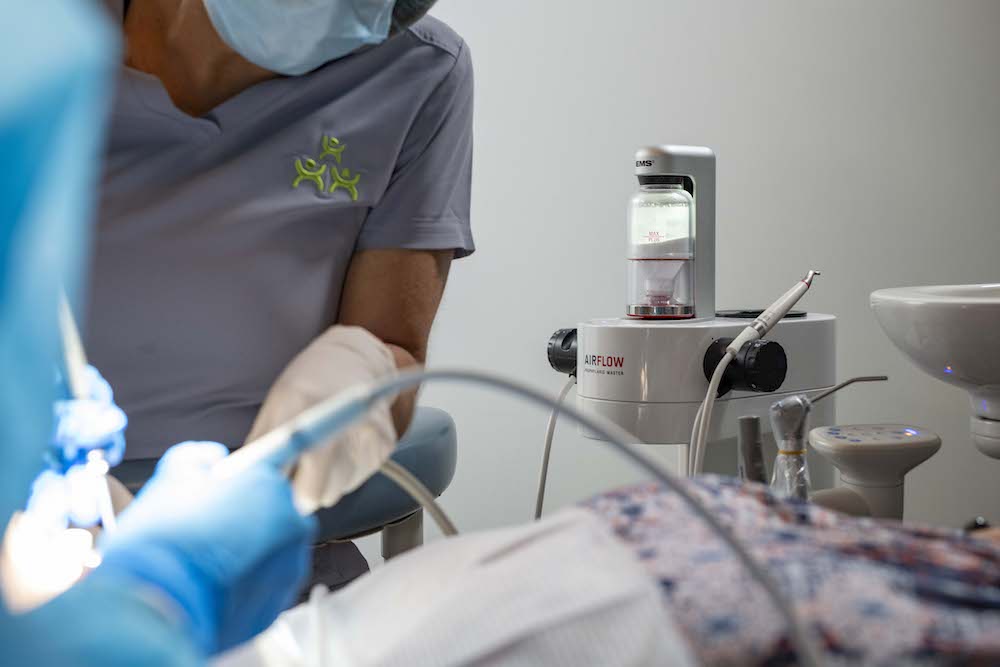
EMS is recognized in the dental world for its development of the GBT protocol (Guided Biofilm Therapy) and for its advanced prophylaxis devices, including AirFlow®, PerioFlow®, and Piezon®, which offer more effective, comfortable, and less invasive teeth cleanings that focus on the prevention and minimally invasive care, improving the experience not only for dentists but for patients as well.
What is Biofilm?
Biofilm is a layer of bacteria that forms on the surface of the teeth. It was previously known as bacterial plaque and damages teeth and gums. Biofilm can become an important risk factor for diseases such as tooth decay, gingivitis, and periodontitis.
What is Guided Biofilm Therapy (GBT)?
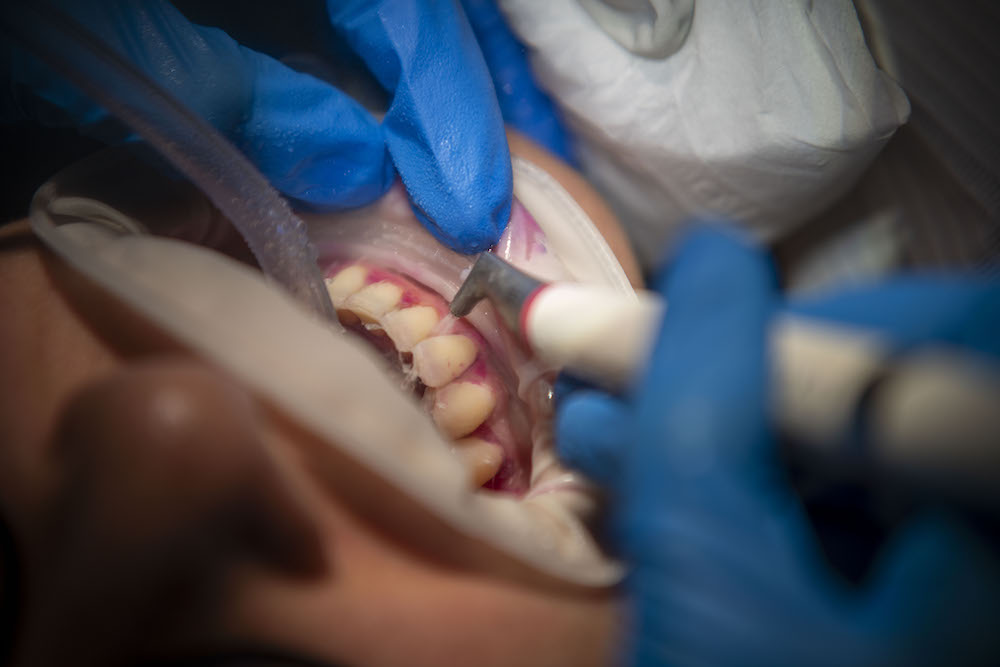
Guided Biofilm Therapy (GBT) is an evidence-based approach to dental biofilm removal. GBT uses a disclosing agent to accurately identify these bacterial buildups, making it easier to eliminate them.
Main Characteristics of GBT
This advanced dental cleaning method prioritizes both patient comfort and effectiveness. Airflow technology with erythritol powder is used, and, when necessary, ultrasonic technology is used that is easy on gums and teeth but tough on plaque and tartar. This methodology provides a pain-free experience for the patient and is increasingly effective in the prevention of gum disease and in the long-term preservation of oral health.
1. Individualized treatment
The biofilm disclosing agent allows the dentist to clearly observe the areas where biofilm has accumulated. Because it can be adapted to the specific needs of each patient, this treatment is highly personalized. Rather than just a standard cleaning, GBT is a targeted intervention that directly addresses problem areas.
2. A gentle procedure
One of the greatest benefits of GBT is its minimal invasiveness. A stream of air with a special powder is used to remove biofilm gently and effectively, creating a comfortable, pain-free experience for the patient in comparison to traditional cleaning methods.
3. Preservation of tooth enamel
The GBT protocol is designed to respect tooth enamel. It effectively removes biofilm without damaging the surface of the teeth. This is crucial to long-term oral health.
4. Effective cleaning
Because of its precision, the GBT protocol reduces a patient’s time in the dental chair. This not only creates a more pleasant experience for the patient, but it also allows for a more thorough treatment.
Benefits of GBT Protocol:
- Greater comfort for the patient: GBT uses glycine and erythritol powders, which are less abrasive and more comfortable than traditional treatments.
- Successful elimination of biofilm: A disclosing agent is applied to detect biofilm and remove it.
- Minimal use of hand instruments and ultrasound: This reduces the need for scraping with curettes or ultrasound, which in turn reduces the risk of sensitivity and enamel damage.
- Can be used on patients with implants and orthodontics: GBT removes biofilm without damaging orthodontic brackets, implants, or restorations.
- Suitable for sensitive teeth: GBT is less aggressive on teeth and gums, which minimizes post-treatment sensitivity.
- Faster and more effective: This protocol is quicker and more efficient, reducing the patient’s time in the dental chair.
- Prevention of gum disease: By effectively removing biofilm, GBT helps prevent gingivitis and periodontitis.
- Improved patient experience: A more comfortable cleaning without the discomfort and noise of traditional procedures.
Why is this relevant compared to other methods?
Guided Biofilm Therapy offers an approach that is aligned with the current tendency in dentistry – less invasive, more personalized treatments. Many patients associate dental cleanings with discomfort and pain. However, GBT offers an alternative that minimizes these feelings without compromising the effectiveness of the treatment. Furthermore, by focusing on the effective elimination of biofilm, GBT acts as an important preventative tool. When biofilm is controlled, the risks of developing oral diseases is reduced. In the long term, this translates into improved oral health and a reduced need for more invasive treatments.
Conclusion
Guided Biofilm Therapy (GBT) is a protocol that represents a considerable step forward in dental hygiene. Its personalized, painless, effective approach not only improves the patient’s experience but also contributes significantly to the prevention of oral diseases. For those seeking oral care that is less invasive and more focused on individual needs, GBT is an option well worth considering.